
Music lovers to go to the 'Circus'
1/15/2012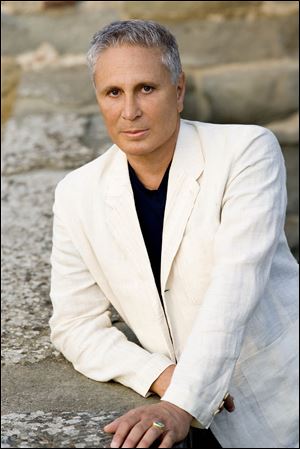
Musician John Corigliano wrote "Circus Maximus," an enormous an complex piece requiring dozens of instrumentalists, for the University of Texas music department in 2004.
It takes a lot of brass — and plenty of hot air — to bring the circus to the Peristyle and to Kobacker Hall, but this year the Toledo Symphony seems to have plenty of both.
For its fourth Classics Series concerts Friday and Saturday, as well as Bowling Green State University’s Festival Series on Thursday, the orchestra has recruited heavily from the region to amass the necessary numbers of players for the premiere of John Corigliano’s massive, explosive Third Symphony for Winds, "Circus Maximus."
Written in 2004 on commission by the University of Texas music department, the enormous and complex piece requires dozens of wind players — both reed and brass — plus strings, a saxophone quartet, piano, percussion, and nerves of steel by all participants.
"It is exciting for us to team up with members of the Toledo Symphony Orchestra on the stages of Kobacker Hall and the Peristyle," says BGSU conducting professor Bruce Moss. He will conduct the premiere for which the university’s Wind Symphony will join the symphony.
"It is a unique work of gargantuan proportions with musical forces around the hall as well as on the stage," says Moss. "We look forward to the opportunity."
The entire concert seems to have sprung from a historian’s vision.
"The program was presented to me as a very Roman theme — less a three-ring circus and more about ancient Rome," said resident conductor Jeffrey Pollock, who will conduct the opening "Roman Carnival Overture," by Berlioz; Khachaturian’s Concert Suite from "Spartacus," and the finale, Respighi’s "The Pines of Rome."
"I think it’s going to be a very rousing program for the dead of winter," said Pollock, adding that he’s looking forward to the appearance of the Glassmen Drum and Bugle Corps for the Respighi, a collaboration the symphony started years ago and continues to groom.
Katie Pakizer, a BGSU senior musician who will perform in the Corigliano, says, "The performance will be a thrilling experience where the audience is encircled by the musicians." Corigliano, she adds, "intended to create the powerful feeling of being in the Circus Maximus of ancient Rome."
The composer, already fascinated with ancient Rome, visited the site of the original Circus Maximus near the Coliseum and Forum, during his work on the commission.
"The Circus Maximus of ancient Rome was a real place — the largest arena in the world where 300,000 spectators were entertained by chariot races, hunts, and battles," Corigliano wrote in his notes for the piece.
"The Roman need for grander and wilder amusement grew as its empire declined. The parallels between the high decadence of Rome and our present time are obvious. Entertainment dominates our reality, and ever-more-extreme ‘reality’ shows dominate our entertainment.
"Many of us have become as bemused by the violence and humiliation that flood the 500-plus channels of our television screens as the mobs of imperial Rome, who considered the devouring of human beings by starving lions just another Sunday show," concluded the composer.
At 72, Corigliano has built a distinguished career. His concerto score for the film The Red Violin won an Oscar in 2005; his second symphony won a Pulitzer, and he has collected Grammy and other awards for chamber music, an opera, and concertos.
"This piece is fun, unique, and different than any other wind ensemble piece that I have encountered in my years of study at BGSU," says Lance Witty, a member of the BGSU Wind Symphony.
"The piece starts off vigorously with on-stage percussion and 11 trumpets surrounding the audience signaling the opening of the work with fanfares at full volume. The preparation for this concert has been both engrossing and demanding, but being given the chance to perform with members of the Toledo Symphony is a great reward."
Because of the collaboration, there will be three chances to hear the concert. The first is 8 p.m. Thursday in Kobacker Hall of the Moore Musical Arts Center. Tickets are $12-$30, at the BGSU box office 419-372-8171, or emailmusictickets@bgsu.edu.
Classics performances also begin at 8 p.m. Friday and Saturday in the Peristyle, where tickets are $21-$47 at 419-246-8000 or www.toledosymphony.com.
Contact Sally Vallongo at: svallongo@theblade.com.