
Mow grass, own property next door
Sandusky seeks to reduce costs
7/17/2011
The just-mowed vacant lot in the 1400 block of Harrison Street might qualify for Mow to Own if an adjacent homeowner enrolls in the Sandusky program.
THE BLADE/AMY E. VOIGT
Buy This Image
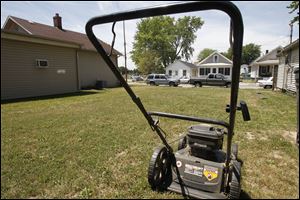
The just-mowed vacant lot in the 1400 block of Harrison Street might qualify for Mow to Own if an adjacent homeowner enrolls in the Sandusky program.
SANDUSKY -- A few Sandusky landowners will soon come to own the abandoned grassy plots beside their homes -- as long as they or their tenants mow the lawn long enough to earn them.
Under Sandusky's new Mow to Own program -- believed to be unusual in Ohio -- homeowners living next to properties that are abandoned but made useless by zoning laws can take care of the land for up to two years, until the value of their maintenance matches the parcel's value.
Then they own the city-owned land for good.
"There's a lot of maintenance that we've had to do, so [the program] will free our people up to take care of city property," said Sandusky chief planner Carrie Handy.
The program, which takes effect in August could eventually relieve the city's maintenance cost for dozens of "unbuildable" parcels while letting adjacent homeowners add the land to their properties and increase their home values.
The plan could be especially effective in Sandusky, a city that is home to hundreds of parcels laid out before the spread of the automobile's popularity and lacking driveways and garages.
These parcels have been trapped by 1950s zoning laws which set minimum parcel sizes that barred construction on them.
But once residents abandon those spaces, they can impose a burden on the city, which takes care of open land after residents complain that they are overgrown. Meanwhile, officials have trouble selling the tiny plots for a fair market value, which can range above $10,000.
"The land is pretty useless," said the program's manager, Amanda Meyers, of the Sandusky Law Department. "The only thing we can do is have adjoining property owners acquire it."
Eight properties are included when the program takes effect next month, and Ms. Meyers said the city will enroll 25 more into its land bank within the coming months, though some of those will be too large for Mow to Own. The city could save up to $30,000 in maintenance fees within a year, but Ms. Meyers added this amount should grow over several months as more properties join the program.
Because the city often does not know a lot is abandoned until a resident complains about its condition, Ms. Meyers said there could be several parcels that residents already maintain themselves, without realizing they could add the piece to their own land.
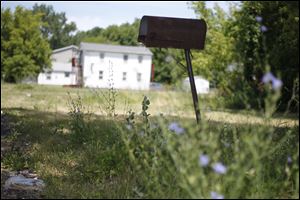
Tall weeds fill a lot in the 1800 block of Harrison Street. A next-door neighbor could own it if the parcel qualifies for Mow to Own.
He said that although a house stood there decades ago, now only grass, overgrown bushes, and trees remain. Thanks to Mow to Own, he hopes to cut down many of the trees and bushes, and even put up a fence.
"[The program] kind of makes sense … if it's just an empty lot and the city keeps having to send people over there," Mr. Schoewe said. "It'll make my house and the neighborhood look a lot better."
Landowners in Sandusky who absorb the property will pay more property taxes -- the city could make close to $1,000 each year in new property taxes from the eight houses in the program -- and Ms. Meyers said she hopes residents will build garages that would add more revenue.
Sandusky is not the only city with hundreds of unbuildable parcels, but other cities have found ways to sell them. Youngstown zoning specialist Ray DeCarlo said the city has at least 1,000 parcels measuring about 30 feet in width and depth, but he added many of those are isolated in wooded areas and could be sold for as little as $100.
A Toledo real estate specialist for the city's Department of Development, Ginette Morell, said unbuildable parcels such as those in Sandusky are valued at just $150.
Ms. Morell said the fee was already so low that the city has not considered another plan to transfer the costs further. "If they want the property and they qualify, I just don't see the purpose that [the program] would serve if they can buy it for $150 anyway," she said.